The Bridgerton Playbook: What a Regency-Era Drama Teaches Us About Building a Brand People Are Obsessed With
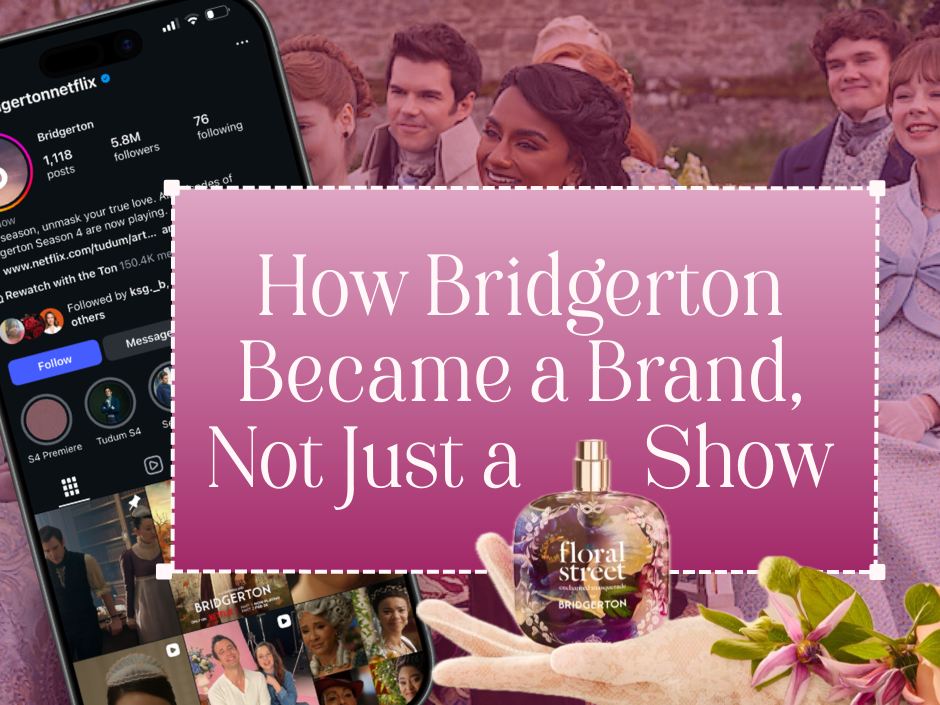
Let me cue you in on something the numbers already confirm: Bridgerton is not a show. It never was. It's a strategically crafted brand that leverages creativity, inclusivity, and immersive storytelling to become the kind of cultural obsession that makes people rewatch a five-year-old series the same week a new season drops.
Season 4 debuted with 39.7 million views in its first four days. Season 3 closed out as the most-streamed original series of 2024 with 21.42 billion minutes viewed. The franchise as a whole generated 189 million views in the first half of 2024 alone. And still, people aren't satisfied. They're already asking what's next.
That's not fandom. That's brand architecture doing exactly what it was designed to do.
In this breakdown, we're pulling back the curtain on the exact moves Bridgerton made to stop being content and start being a universe, and more importantly, what small businesses can take directly from their playbook.
01 — CULTURAL REFRAMING
How being boldly different created obsession

A lot of shows are different. Different isn't the differentiator. It never has been. What Bridgerton did was something far more precise: they took a genre that was historically exclusive, Regency-era period drama, and injected it with modern cultural codes that made it impossible to look away.
Orchestral covers of Ariana Grande and Taylor Swift playing during ballroom scenes. A diverse cast leading a historically whitewashed genre. Hyper-saturated, jewel-toned costuming in a category that usually leans muted and dusty. That's not a creative accident. That's category disruption with intention.
The formula isn't novelty for novelty's sake. It's familiar plus unexpected. They kept the structure: period romance, aristocratic intrigue, the marriage market. But they injected it with contemporary energy. Accessible enough to pull in a new audience. Aspirational enough to keep them hooked.
That's the difference between being interesting and being unforgettable.
The takeaway for your brand: The strategic move isn't to be random. It's to find the tension between what your audience already recognizes and what they've never quite seen before. Meet them in the familiar. Then surprise them there.
02 — COMMUNITY ENGINEERING
They didn't use social media. They extended their world through it.

Most brands treat social media as a promotion channel. Bridgerton treats it as an extension of the show's universe. That single shift in perspective is worth studying deeply.
Lady Whistledown, the anonymous gossip narrator of the series, doesn't just exist in the show. She travels. The brand's social copy mimics her voice: cunning, witty, conspiratorial. Casting announcements read like society news. Season teasers drop like leaked letters. Countdowns feel like event invitations you'd be a fool to miss.
Character-specific memes circulate. Fan edits get amplified. Cultural moments from the show, like The Carriage Scene from Season 3, take on a life of their own, earning a BAFTA nomination for Memorable Moment and being directly referenced in other shows. That's a single scene becoming a standalone cultural artifact.
When your brand voice doesn't stop at the point of sale, when it shows up everywhere your audience lives, you stop being a transaction and start being part of someone's daily world.
The takeaway for your brand: Your brand voice shouldn't disappear after someone buys, watches, or clicks. It should travel across every touchpoint: your captions, your emails, your content, your community. Consistency is what creates recognition. Recognition is what creates loyalty.
03 — BRAND SYSTEM DISCIPLINE
The identity is so tight, every detail speaks the same language.

Everything in Bridgerton's world has been considered. The typography. The orchestral scoring. The floral palettes. The costume hierarchy, because what each character wears communicates their arc before they even speak. The pacing of scenes. Even the color psychology assigned to each Bridgerton family.
Season 1 is Daphne's sky blue. Season 2 is Kate's lilac and emerald. Season 3 shifts to Penelope's gold and coral. The palette evolves, but it always lives inside the same recognizable world. Each season functions as a sub-brand, a chapter with its own energy, while the master brand remains unmistakable.
That's what brand system discipline looks like in practice. It's not rigidity. It's coherence. The kind that lets you evolve, expand, and shift without ever losing yourself.
When The Simpsons parodies you, when Doctor Who writers cite your show as direct inspiration, your identity has moved from content into cultural shorthand. That only happens when every single execution is speaking the same language.
The takeaway for your brand: You can evolve without diluting. New offers, new content, new seasons should feel like chapters, not rebrands. Ask yourself: is every piece of content, every caption, every visual, every offer in conversation with the same brand world?
04 — THE EXPERIENCE ECONOMY
They built an ecosystem, not just a screen.
This is where Bridgerton stops being a show and becomes a lifestyle brand. The franchise didn't stop at Netflix. They built an entire world around the world, and they invited fans inside it.

Merchandise: shirts, mugs, tote bags, collectibles. Playlists curated by characters and seasons. Behind-the-scenes content and staged interviews where cast members show their real personalities. Walking tours of filming locations. A Grammy Award-winning concept album created entirely by fans.
And the brand collaborations? Nothing random. Everything strategic.

Bath and Body Works launched a yearlong Netflix partnership using Bridgerton as the flagship collection: candles, fragrances, and body care inspired by scenes and characters from the show. Scent is the most emotionally evocative sense, and Bridgerton lives in the emotional. That's not a coincidence.
Dove partnered for a limited-edition body care collection with a campaign called "Let Them Talk," championing real beauty. The alignment? Bridgerton's inclusive casting had already started a conversation about embracing beauty in all forms. Dove simply met the audience where the culture already was.
The Republic of Tea dropped a Bridgerton-inspired collection of blends. Tea in a Regency-era show where the social season revolves around drawing rooms and afternoon ritual? That's not product placement. That's world extension.
LUSH, Kiko Milano, Risqué nail polishes inspired by the iconic Bridgerton blue, Allure Bridals, and even Maxbone, a luxury pet accessories brand for fans who dote on their dogs the way ton characters do. Each partnership was chosen to deepen the world, reinforce the positioning, and give fans a way to physically inhabit the brand they love.
The takeaway for your brand: If your brand only exists at the point of transaction, you're leaving loyalty on the table. Obsession is built through immersion. Give your audience a way to live inside your world through content, product, community, or experience. The more touchpoints, the deeper the belonging.
05 — DEMAND NURTURING
They don't hit and quit. The narrative never fully goes silent.
Here's a brand mistake that costs more than most people realize: going quiet between launches.

Bridgerton seasons have gaps, sometimes over a year. Season 2 premiered in 2022. Season 3 didn't arrive until 2024. But the brand never disappeared. Between seasons there are press cycles, staged cast interviews, casting announcements, behind-the-scenes drops, teaser reveals, and cultural commentary. There are spinoffs. Queen Charlotte: A Bridgerton Story premiered in 2023 and generated 503 million hours of viewing in its first two months, while simultaneously driving fans back to old seasons of the original show.
They understand that attention is a muscle. Stop exercising it and it atrophies. Keep it engaged, keep it warm, and by the time the new season actually drops, your audience isn't just ready. They're hungry.
Season 4 proved this perfectly: its debut drove audiences back to Season 1, which returned to the Netflix Top 10 with 2.7 million views. Content five years old still performing. That's what sustained brand momentum looks like.
The takeaway for your brand: Silence kills momentum. Even in your off-season, between launches, between collections, between projects, your brand should be telling a story. Show up. Stay relevant. Give your audience something to stay connected to, and they'll be ready when it's time to sell.
06 — PROOF OF STRATEGY
The results aren't lucky. They're earned.
Season 1 was watched by 82 million households in its first 28 days, breaking Netflix records at the time and surpassing their own projections by 19 million households. Season 3 opened with 45.1 million views in four days, spent 11 weeks in the Netflix Top 10, and closed as the No. 9 most popular English-language series in Netflix history with 106 million views in its first 91 days. According to Nielsen, Bridgerton was the single most-streamed original series of 2024 with 21.42 billion minutes viewed across the full franchise.
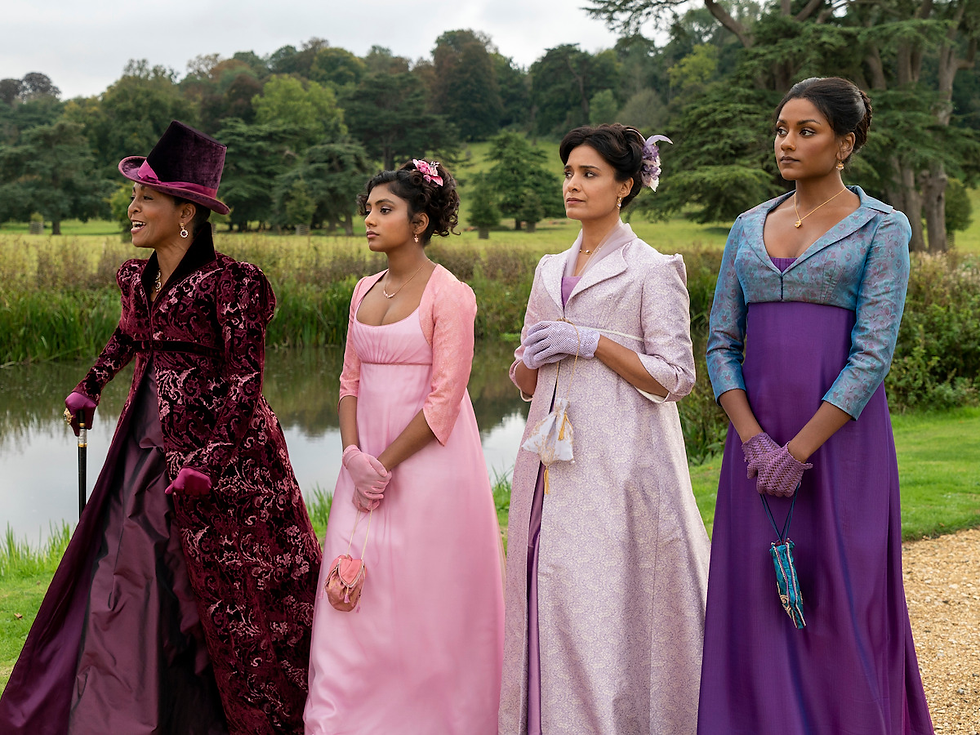
Fashion search data shows the Bridgerton Effect is real: Lyst tracked spikes in searches for corsets, elbow-length gloves, and headpieces following each season's premiere. The show's color choices directly influenced fashion trends.
Actual filming locations like Ranger's House and Castle Howard have seen increased tourism. A fan-created concept album won a Grammy.
Bridgerton is produced by Shondaland in partnership with Netflix, which signals serious infrastructure and distribution power. But infrastructure alone doesn't create cultural obsession. Execution does. The strategy is what multiplied the platform.
The takeaway for your brand: Strong strategy multiplies distribution power. You can have the best platform, the best product, the best positioning, but without intentional brand building, you have visibility without identity. And visibility without identity does not create loyalty.
07 — CONTRAST SHARPENS INSIGHT
Not all successful shows become brands. Here's the difference.

To appreciate what Bridgerton built, it helps to hold it next to other successful shows and ask: which ones became brands?
Game of Thrones was a cultural phenomenon. It broke viewership records, dominated conversation, and spawned spinoffs. But its fandom is largely built around narrative, around the plot, the characters, the lore. Its identity is prestige storytelling. It doesn't live in your bathroom cabinet or your morning cup of tea.
The Gilded Age is critically acclaimed, beautifully produced, and draws comparisons to Bridgerton in aesthetics and setting. It even borrowed a carriage scene moment in Season 3 advertisements after Bridgerton's went viral, a telling detail. But it hasn't engineered the same lifestyle brand, the same sensory ecosystem, the same invitation for audiences to step inside.
The distinction isn't quality. All three shows are excellent. The distinction is intent. Bridgerton was built to be a brand from the beginning: inclusive, sensory, participatory, and designed for the kind of fan who doesn't just want to watch. They want to belong.
Not all successful shows become brands. And not all businesses with a good product build something people are obsessed with. The ones that do? They think beyond the transaction.
The distinction: Success without brand architecture creates fans. Brand architecture creates a movement. Ask yourself: are you building something people consume, or something people belong to?
The Bottom Line

Bridgerton is what happens when storytelling meets brand architecture. When a creative team stops asking "how do we make a great show?" and starts asking "how do we build a world people never want to leave?"
The framework is transferable. You don't need Netflix's budget. You don't need Shondaland's infrastructure. You need clarity on who you are, consistency in how you show up, and the courage to build beyond the transaction.
Your brand can have a voice that travels. A world that people want to step inside. A community that stays warm between your launches. Collaborations that extend your positioning. And proof, real compounding proof, that strategy done right creates the kind of loyalty money can't simply buy.
The question isn't whether Bridgerton got lucky. The question is which part of their playbook you're going to steal first.
Which part stood out to you most? The positioning, the messaging, or the execution? Sit with that. Your brand might be asking for the same kind of decision.
If your brand is ready for this level of intention, not just aesthetics but positioning with power, let’s build it properly.
Explore working with Elsiae and start with strategy.

Comments